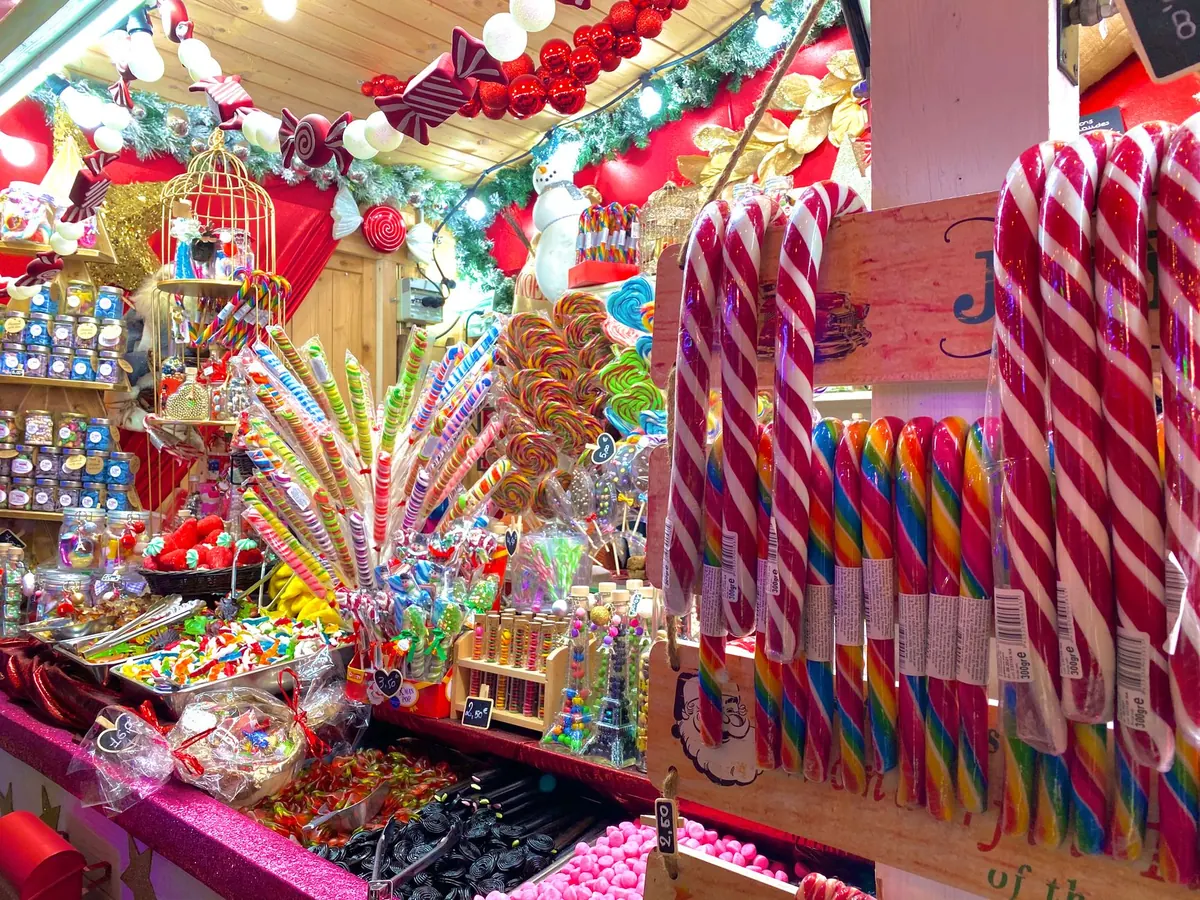
A sweet shop counter is a small museum of British taste. Behind the glass sit shapes that have been sold for a century and more: striped humbugs, dusty aniseed balls, glossy foam bananas, ropes of liquorice. What looks like a random jumble is really a history lesson. Sugar became affordable, railways made delivery quick, and a handful of towns — Pontefract, Sheffield, Liverpool, Wigan — built local specialities that somehow never fell out of favour. Here is how those jars got filled.
Victorian Jars and the Birth of the Sweet Shop
Sugar was once a serious luxury, and sweets sat closer to medicine than to treats. Apothecaries kept liquorice, mint and horehound in drawers and sold them for coughs and sour stomachs. As sugar from Caribbean plantations — worked by enslaved people — flooded into Britain and prices fell through the eighteenth and nineteenth centuries, confectionery moved from the dispensary to the shop counter.
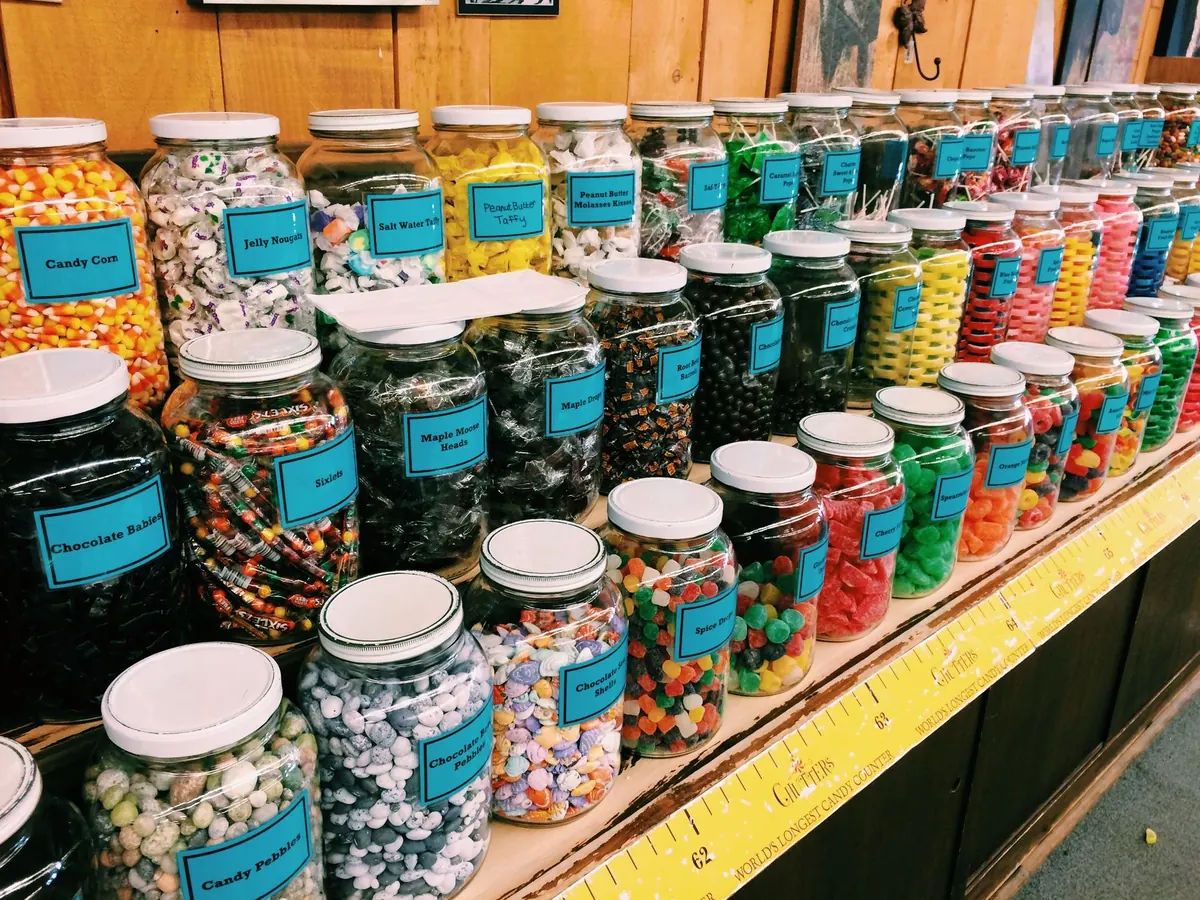
By the late Victorian period most high streets had a confectioner, or a grocer with a sweet counter. Sweets were weighed from tall glass jars on brass scales, tipped into paper bags and sold by the quarter. Boiled sweets suited the trade perfectly: cheap to make, sturdy enough to travel, and happy to sit in a jar for months. That shop — rows of jars, a marble slab for toffee, a scoop — is the look we still copy today.
Boiled Sweets: Sugar, Heat and a Bit of Nerve
The technique behind most classic boiled sweets has barely changed. Sugar and glucose are boiled with water to a very high temperature, then flavoured and coloured, poured onto a slab, pulled on a hook to work in air, and cut with shears while still warm. Get the heat wrong and you end up with a sticky lump or a syrup; get it right and you have something glassy that cracks between your teeth.
That one method produced a remarkable range:
- Humbugs — mint with a stripe, traditionally pulled to create the pattern.
- Aniseed balls — hard, layered, and famously slow to dissolve.
- Pear drops — soft fruit flavour with a sharp edge.
- Everton mints — a Liverpool institution, dark and chewy.
- Rhubarb and custard — two colours, two flavours, one hit of nostalgia.
Acid drops, cola bottles, pineapple chunks and bonfire toffee belong to the same family. Many were regional long before they were national, sold first in one town and carried elsewhere by rail.
Liquorice: Pontefract's Black Gold
Liquorice has the strongest claim to being Britain's first proper sweet. The plant was grown around Pontefract in West Yorkshire from the sixteenth century, and the town's soil and climate suited it. Liquorice root was chewed and sold as a remedy long before it was a treat.
George Dunhill of Pontefract is commonly credited with adding sugar and flour to liquorice in the eighteenth century, producing a softer, sweeter cake stamped with a castle and sold in rounds. Whether the story is exactly right or not, Pontefract cakes became the sweet that put the town on the map.
Liquorice allsorts arrived much later, from Bassett's of Sheffield, at the end of the nineteenth century. The much-repeated tale is that a travelling salesman dropped a tray of samples in front of a customer, the mixed pile was handed over anyway, and it proved so popular that the mixture became the product. It explains why an allsort assortment is so deliberately odd.
Foam Sweets and the Post-War Counter
Foam sweets came later. Instead of boiled sugar, they are made from a light, aerated mixture, often set in starch moulds, which gives that soft, spongy bite. Pink shrimps, foam bananas, mice, strawberries and fried eggs share the same tradition, and most took hold in Britain in the middle of the twentieth century, when sweet manufacturing scaled up and bright colours became cheap.
They behave differently to boiled sweets. Foam picks up moisture, goes tacky in a warm kitchen and hardens in a dry one, which is why it is usually sold quickly and eaten quicker. Many standard foam sweets, shrimps and bananas included, are set with pork or beef gelatine, so check the label if that matters to you — vegetarian versions are now widely available.
Rationing, Penny Sweets and Pick-and-Mix
Sweet rationing lasted in wartime and post-war Britain until 1953, and when it ended the counter exploded. Sweets were sold individually, a penny each or less, which made them the first thing a child could buy with their own money. Sherbet fountains, flying saucers and dip dabs filled the gap.
Then came pick-and-mix. Rather than asking for a quarter of one thing, you took a bag and a scoop and built your own mix. Woolworths made it a national habit, and its closure in 2009 left a gap that supermarkets, garden centres and online sweet shops have been filling ever since. Retro boxes, wedding favour jars and letterbox hampers all come from the same idea: choose your favourites, buy them by weight.
A Regional Map of British Sweets
Ask a dozen people for their local speciality and you will get a dozen answers. A rough map:
- Yorkshire — Pontefract cakes, liquorice and minty boiled sweets.
- Lancashire — Uncle Joe's Mint Balls, made in Wigan since the late nineteenth century.
- Merseyside — Everton mints, sold in blue and white.
- Scotland — tablet, Edinburgh rock, soor plooms and macaroon bars.
- Seaside towns — sticks of rock, pulled with the town's name running through.
- Wales — fudge and toffee, often made in small batches by the coast.
Building a Sweet Selection That Works
Whether you are filling jars for a party or putting together a gift, a few practical rules make the difference.
- Balance the textures. Mix hard boiled sweets, soft foam, chewy liquorice and something fizzy. An all-boiled selection feels monotonous after three sweets.
- Keep flavours apart. Store strong aniseed, mint and liquorice away from foam and fondant, which absorb smells quickly.
- Mind the weather. Foam sweets and chocolate dislike warmth; boiled sweets and liquorice are far more forgiving in a warm room.
- Weigh, don't guess. For party bags, around 100g per person is a generous portion; for a shared jar, allow a little more.
- Check the labels. Look for gelatine, colourings and allergen advice if you are buying for a mixed group.
Store sweets in airtight jars or tins, somewhere cool and dark, and away from the kettle. Boiled sweets will hold for months; foam is best eaten within a few weeks. And keep a sense of proportion — sweets are a treat, not a food group. If you are managing a health condition such as diabetes, take advice from your GP or a dietitian rather than relying on the internet.
Photo: Marianne Tang / Pexels