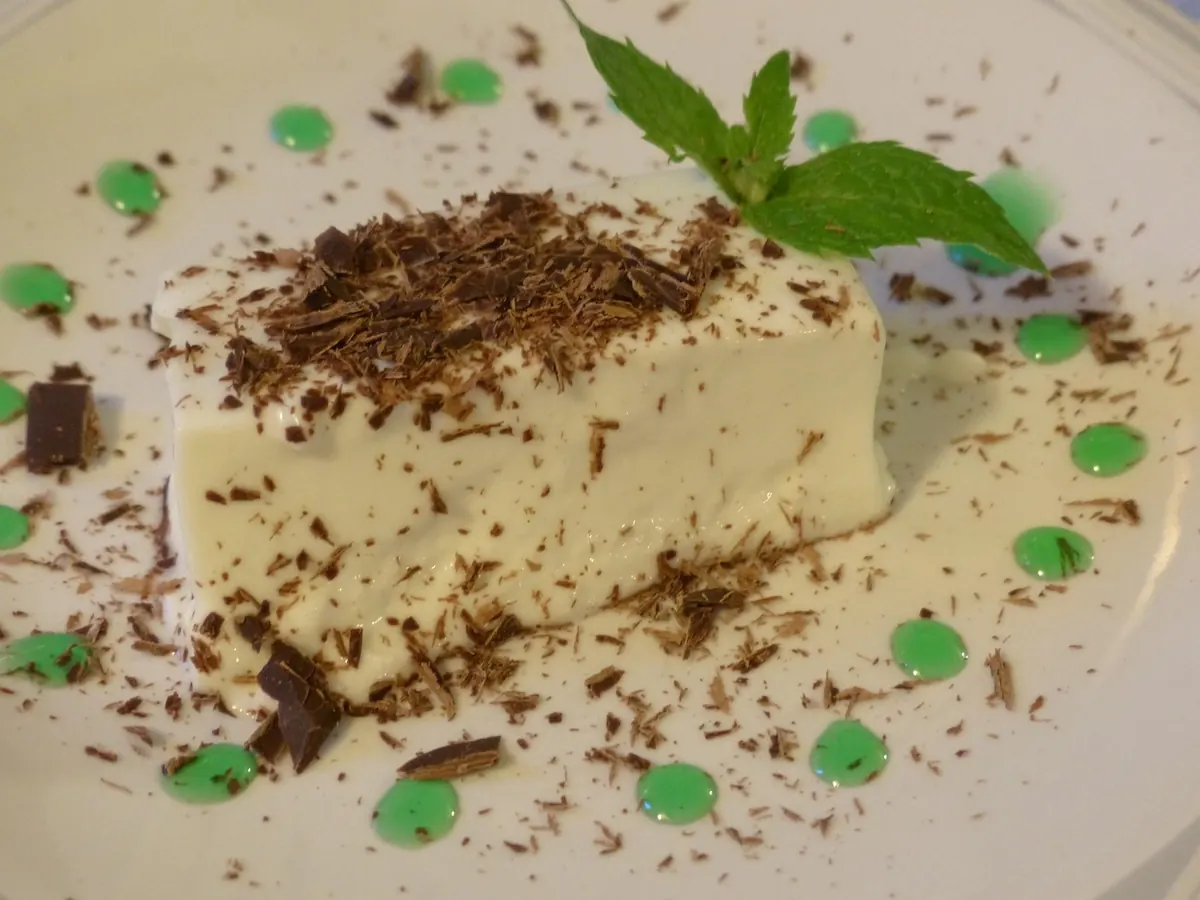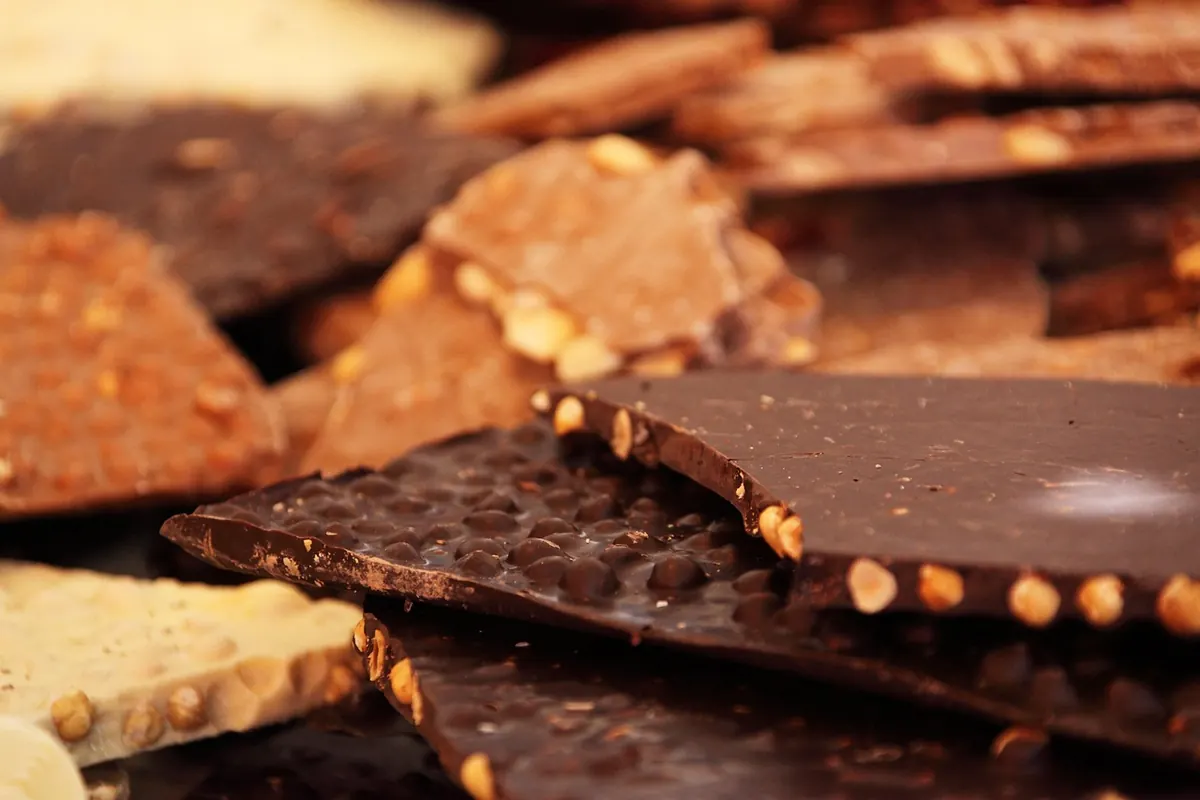
Three colours, three flavours, one shelf. That is how chocolate shopping usually feels until you get a bar home, melt it for a birthday cake and watch the ganache split or the drizzle set to a dull grey. Milk, dark and white chocolate are not simply variations on a theme. They behave differently in a bowl, set differently on a tray and keep for different lengths of time.
What follows is a buyer's guide rather than a history lesson: what the numbers on the wrapper mean, how each type melts, and which bar to reach for when you are baking, wrapping a gift or just after something to eat with a cup of tea.
What the cocoa percentage is actually telling you
On a dark bar, the percentage is the share of the chocolate that comes from the cocoa bean — cocoa solids plus cocoa butter. A 70% bar is roughly 70% cocoa-derived ingredients and 30% sugar, which is why it tastes bitter, fruity or even sour depending on the bean. Anything from 50% upwards is sold as dark, and the scale runs to 100%, which is unsweetened and best used in cooking rather than eaten straight.
Milk chocolate contains cocoa solids, cocoa butter, sugar and milk solids. The cocoa figure is usually well below 50%, and many familiar bars sit nearer 30%. More milk and more sugar mean a softer, sweeter, gentler flavour — caramel, malt, vanilla — with far less of the sharp fruitiness you get from dark.
White chocolate contains no cocoa solids at all. It is cocoa butter, sugar, milk solids and vanilla, which is why it tastes of cream and toffee rather than chocolate. If you see a percentage on a white bar, it refers to cocoa butter content, and it matters: a white chocolate with a generous cocoa butter level melts smoothly, while cheaper versions bulked out with other vegetable fats can taste waxy.
Sweetness and flavour, side by side
Think of the three as a sliding scale of sweetness. Dark is the least sweet and the most complex, with bitterness that cuts through other flavours — which is exactly what you want in a brownie or a chocolate tart. Milk is the middle ground and the easiest to eat by the handful, but its milk and sugar can flatten subtle cocoa notes. White is the sweetest of the three and the most prone to cloying, which is why it works best paired with something sharp: raspberries, lemon, salted pistachios, coffee.
A useful rule when buying: the higher the cocoa percentage, the less sugar, the firmer the set and the more assertive the flavour. If a recipe says "dark chocolate" without a number, 60–70% is the safe middle. Go higher and you may need extra sugar elsewhere in the recipe; go lower and the result will taste more like milk chocolate than the recipe intended.
Melting behaviour in a real kitchen
Cocoa butter melts just below body temperature, which is why chocolate softens in your hand and why it can scorch in a pan without ever looking like it is burning. Dark chocolate is the most forgiving: it flows thinly, sets hard and glossy, and snaps when broken. Milk chocolate carries milk proteins and extra sugar that catch and burn more readily, and it sets softer. White chocolate is the most delicate of the three — highest in sugar and milk solids, quickest to scorch, and the most likely to turn grainy.
Whichever you use, the method is the same. Chop or grate the bar finely so it melts evenly, use a dry bowl over a pan of barely simmering water, and keep the base of the bowl clear of the water. Short bursts in a microwave on a low setting work just as well if you stir between each one.
One stray drop of water will seize melted chocolate into a stiff, grainy paste. Dry utensils, dry bowl, dry hands.
Melting checklist
- Chop small. Even pieces melt at the same rate; big chunks leave lumps.
- Keep the heat low. Steam, not a rolling boil, and never let the bowl touch the water.
- Stir gently. Whisking air into melted chocolate creates bubbles that set into a dull surface.
- Take it off early. Remove from the heat while a few pieces remain and stir until they disappear.
- Cool before adding. If you are folding chocolate into cream or batter, let it drop to room temperature first or it will cook the mixture.
Tempering — the process of heating, cooling and reheating so the chocolate sets with a shine and a snap — follows the same principle for all three, but dark chocolate is worked a degree or two warmer than milk, and milk warmer than white. If you only ever melt chocolate for cakes and cookies, you can skip tempering altogether. If you are making truffles, dipped strawberries or moulded bars, it is worth learning.
Baking: matching the bar to the job
Brownies and blondies. Dark chocolate around 70% gives the dense, slightly bitter result most people expect. Swap in milk chocolate for a sweeter, cakier traybake, or use white chocolate with raspberries for a blondie that does not taste flat.
Cookies. Chocolate chips are formulated to hold their shape in the oven; chopped bars pool into glossy puddles. Both are good, but they give different results, so decide which you want before you start. Chopped dark chocolate in a salted cookie is hard to beat.
Ganache and fillings. Dark chocolate sets firm with roughly equal weights of cream and chocolate. Milk and white need less cream, or the filling will stay soft enough to slide off a cake — start with a third less and adjust while warm.
Drizzles and decoration. White chocolate takes colour beautifully and pipes neatly, but it needs a cooler room than dark. Dark chocolate is the better choice for a mirror glaze or a sharp, clean finish.
Gifting: building a box that actually gets eaten
Variety beats volume. A box of six or eight pieces covering a dark, a milk, a white and one flavoured bar will please more people than a kilogram of the same thing. Look for the words cocoa butter in the ingredients on anything you plan to melt; if the label lists vegetable fat instead, you are buying a coating, which is fine on a children's cake but will not temper or set with a snap.
Consider how the recipient eats chocolate. Someone who takes a square with black coffee will appreciate a 70% bar; someone who eats it in front of the television will get more pleasure from a well-made milk. Buying for a household? A mixed selection avoids the polite nod and the half-eaten bar left in the fridge.
Snacking and everyday shopping
For eating rather than baking, match the bar to your mood. Milk chocolate in the 30–40% range is the everyday choice. Dark from 50–70% suits slower eating and pairs well with coffee, red wine or sharp cheese. White is best in small quantities and in thin bars, where the sweetness has less chance to overwhelm.
Supermarket own-brand chocolate is worth trying alongside the familiar brands. Cocoa is cocoa; what changes is the blend, the sweetness and how finely the chocolate is ground. Buy a small bar first, taste it, then commit. And check the shelf life on the back — chocolate keeps, but milk and white will not keep as long as dark.
Storing it well, and a final buying tip
Keep chocolate in a cool, dark, dry place — ideally between about 15°C and 18°C — away from radiators, windows and strong-smelling foods, since cocoa butter absorbs odours from whatever sits next to it. Leave it in its wrapper, or wrap it again in foil and seal it in a bag. The fridge is a last resort for hot weather: if you must, use an airtight container, then let the bar come back to room temperature before eating to avoid a dull grey bloom. Bloom is harmless, just cosmetic.
Finally, buy in the size you will use. A big bar broken into repeatedly is a bar that goes stale at the edges; a couple of smaller bars, used within a month or two, will taste better every time. Chocolate is a treat rather than a health food, whatever the percentage on the front — if you are managing a health condition or watching your diet closely, speak to your GP or a registered dietitian rather than relying on cocoa content as a guide.
Photo: stevepb / Pixabay