Chocolate gets the glory. It also gets the gift boxes, the advent calendars and most of the aisle in every supermarket. So when the person you're buying for doesn't like the stuff, the easy options vanish and you're left staring at a wall of truffles wondering what to do instead. The good news is that a box built from mints, gums, boiled sweets and sour sweets can be far more interesting than another selection of pralines. It just needs a bit of thought about who's eating it.
Start with what they already reach for
Before you buy anything, work out which kind of sweet eater you're buying for. Someone who keeps a tin of extra-strong mints in the car is not the same customer as someone who works through a bag of fizzy cola bottles every Friday night. If you can, ask. If you want to keep the gift a surprise, watch what they pick out of a shared bag, or ask someone close to them.
The useful questions are simple: hard or chewy? Fruity or minty? Do they enjoy sour things, or do they pull a face? And are there sweets they loved as a child — pear drops, sherbet lemons, cough candy — that would land better than anything fashionable? A box built around two or three genuine favourites beats a box of twelve things they'll politely ignore.
Choose your building blocks
A non-chocolate box has four jobs to do: something long-lasting, something chewy, something clean-tasting and something with bite. Boiled sweets, gums, mints and sours cover all four.
Boiled sweets: the backbone
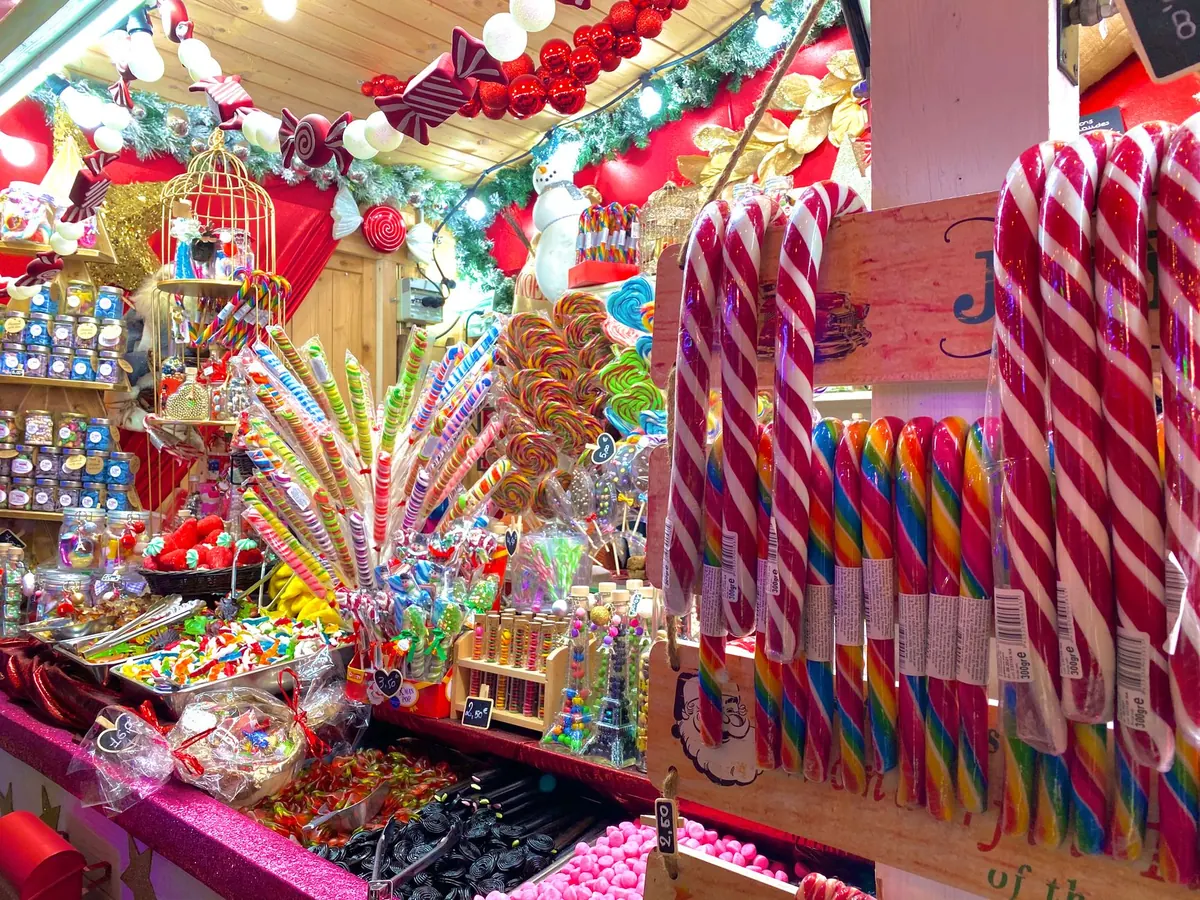
Hard boiled sweets last well, travel without damage and make a box feel generous. Pear drops, rhubarb and custard, lemon sherbets, aniseed balls, barley sugar and traditional mint humbugs all do the job. Pick three or four flavours that sit well together — a citrus, a berry and something warming such as ginger or clove — rather than six variations on "fruit". Sugar-free boiled sweets are worth keeping in their own small bag, as some sweeteners have a laxative effect in quantity and nobody wants to discover that by accident.
Gums and pastilles: the chew
Wine gums, fruit gums, jelly babies, midget gems, pastilles and soft jellies give the box bounce, and they sit at the opposite end of the texture scale from boiled sweets. Check the ingredients if your recipient is vegetarian: plenty of gums are set with gelatine, while pectin and starch versions are easy to find. Liquorice belongs in this group too, though it divides people — and a strong aniseed flavour will scent anything stored loose beside it.
Mints: the palate cleanser
Mints give the box a clean note between sweeter things. Include one mild option and one with more punch: soft fondant mints alongside hard peppermints, or spearmint next to a stronger menthol type. Familiar sweets matter in a gift, so a handful of mint imperials or humbugs earns its place even if they aren't the most exciting thing in the tin.
Sour sweets: the edge
Sour sweets are the category people either love or skip entirely. If your recipient is in the first group, add a handful of fizzy belts, sour cherries, sherbet lemons or sour apple sweets — enough for a change of pace, not a third of the box. Coated sours turn sticky and transfer colour to everything they touch, so seal them in a small paper bag or a twist of cellophane.
Balance flavours, textures and strengths
A box that's all one texture or all one flavour family gets dull by the fifth sweet. Aim for variety, with a few rules to keep you on track.
- Work to roughly a third hard, a third chewy, and a third sharp or minty.
- Don't repeat flavours. One lemon, one berry, one mint and one aniseed or ginger sweet is plenty.
- Buy smaller amounts of more varieties. Five 100g bags make a better box than one 500g bag.
- Keep strong flavours apart. Aniseed, menthol and clove will scent everything nearby, so bag them separately.
- Include one thing they've never tried. It's a gift, and a small gamble is part of the fun.
- Leave a little space. A crammed box looks mean rather than generous, and loose sweets need room to sit without crushing.
On quantity: around 150g to 200g suits a small thank-you gift, while 400g to 500g in a tin feels like a proper present. If the box is for a household, build in two or three of each favourite so nobody has to negotiate.
Presentation matters as much as the sweets
Choose the container before you choose the sweets. A hinged tin protects boiled sweets and keeps mints fresh; a rigid card box with a divider looks more considered; a paper bag with a folded top is fine if the contents will be eaten within a week or two. Line whatever you use with tissue paper in a colour that doesn't match the sweets, so the colours stand out.
Use paper cases or small bags to group similar sweets, otherwise everything merges into a heap of sticky shapes. If you're repackaging loose sweets, keep a note of the ingredients, especially for anything containing gelatine, nuts, wheat or milk. A handwritten list of what's inside — "pear drops, mint creams, sour cherries, liquorice comfits" — makes the box feel like a considered selection rather than a scoop from the pick-and-mix, and it helps anyone with an allergy avoid guesswork.
Practical checks before you hand it over
- Diets and allergies: gelatine makes many gums unsuitable for vegetarians and vegans, some liquorice and boiled sweets contain wheat, and fondant sweets can contain milk or egg. Keep wrappers or write a clear contents list.
- Sugar: this is, by definition, a box of sugar. If the person manages a health condition such as diabetes, or is watching their sugar for dental reasons, ask them first and follow any advice from their GP or dentist about how sweets fit into their diet.
- Storage: keep the box cool and dry, away from strong smells. Boiled sweets turn sticky in damp air, soft jellies dry out, and fondant or marshmallow items are best eaten sooner rather than later.
Putting the box together
- Line your tin or box with tissue, leaving enough overhang to fold over the top.
- Place the largest items first, around the edges: bags of boiled sweets, or a block of fudge or nougat if you're including one.
- Fill the middle with wrapped groups of gums, jellies and pastilles, using paper cases to keep colours and flavours separate.
- Tuck mints and sours into the gaps in their own small bags, well away from anything aniseedy.
- Add one thing that doesn't quite fit the pattern — a single barley sugar twist, a bag of sherbet, a few wrapped boiled sweets in an unusual flavour.
- Fold the tissue over, close the lid, and write a short note listing the contents and any allergen information.
Nothing in a box like this is hard to find, and that's the point. Put the effort into the choosing rather than the buying, and you'll give something that gets eaten rather than passed along.
Photo: StockSnap / Pixabay